Home › Road, Street, and Municipal Paving
Keep traffic moving with dependable road paving in Kansas City, MO. We pave and resurface streets, subdivisions, and municipal roads with quality asphalt mixes and proper compaction. Our crews focus on smooth transitions, drainage, and long term performance for drivers and residents.
Precision Asphalt Kansas City provides professional road paving throughout Kansas City, MO, Missouri and the surrounding area. Our licensed, insured crew delivers safe, clean, on-time work with a free estimate before anything begins. Call (816) 326-1167 or request your free quote.
Road Paving for Kansas City Neighborhoods and Municipalities
When a road in Kansas City starts to ravel, rut, or show alligator cracking, it affects more than the drive. It impacts school bus routes, emergency response times, and neighborhood pride. Precision Asphalt Kansas City focuses on road, street, and municipal paving that fits how our city actually functions, from tight residential streets in older neighborhoods to busier collector roads near commercial corridors.
Our crews work directly with cities, engineers, HOAs, and property managers to plan paving projects that minimize disruption. That means scheduling around school start and dismissal times, coordinating with trash and delivery services, and sequencing work so residents and businesses still have reasonable access. Before we bring in any equipment, we walk the site to identify drainage patterns, weak base areas, utilities, and curb transitions so there are no surprises for you later.
Because we live and work in Kansas City, MO, we understand how freeze-thaw cycles, heavy truck traffic, and local soils affect road performance. We use that local experience to recommend pavement sections that will last in this climate instead of one-size-fits-all designs that might work in another region but fail early here.
How Our Road, Street, and Municipal Paving Process Works
Effective road paving is more than just spreading asphalt. Precision Asphalt Kansas City follows a structured process to keep projects predictable, safe, and within budget.
1) Existing pavement evaluation: We begin with a visual and mechanical inspection. We look for base failures, drainage issues, utility trench settlement, reflective cracking, and edge breakdown. On older Kansas City streets where multiple overlays have been added over the years, we determine whether milling, full-depth reclamation, or complete reconstruction is the best long-term value.
2) Survey and layout: For municipal work, we coordinate with engineering plans and elevations. For private streets and HOAs, we often take simple grade checks to confirm water will run to existing inlets and not toward driveways or garages. We mark limits of work, transitions, manholes, valve boxes, and any concrete tie-ins.
3) Milling and base repair: If overlaying, we mill the existing surface to a set depth to preserve curb reveal and driveway transitions. Soft spots are cut out and rebuilt with compacted aggregate and, if needed, geotextile stabilization. This step is critical in many Kansas City subdivisions where underlying clay soils can pump and shift when wet.
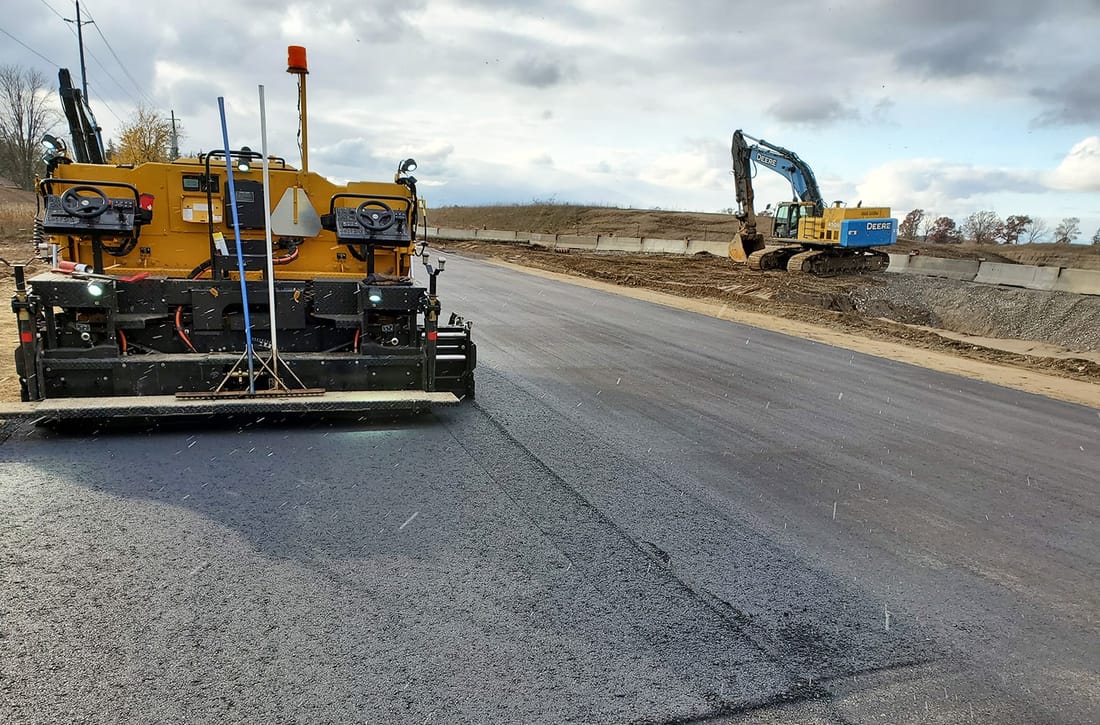
4) Paving and compaction: We place asphalt with a paver to achieve a consistent mat and proper cross slope. Compaction is done with a combination of steel drum and pneumatic rollers, with passes adjusted to air temperature, mix temperature, and layer thickness. For municipal projects, we follow specified density requirements and provide test results when requested.
5) Joints, edges, and details: We treat longitudinal and transverse joints and cut clean edges at tie-in locations. We also coordinate raising manholes and valves to final grade when that is part of the scope. Clean, sealed joints and tight transitions help prevent water infiltration and premature edge failures.
6) Striping and final safety checks: After sufficient cooling and curing, we apply pavement markings and signage as needed and perform a walk-through with the client to confirm access, grades, and drainage are performing as intended.
Material Options and Typical Road Section Designs
Different streets in Kansas City carry very different loads. A cul-de-sac on a quiet block does not need the same pavement section as a cut-through route used by delivery trucks and school buses. Precision Asphalt Kansas City designs asphalt solutions around actual use.
For light residential streets, a common section includes a compacted aggregate base with a 2 to 3 inch asphalt surface course. Where traffic is heavier, we may recommend a multi-layer approach, for example a 2 inch wearing course over a 2 to 3 inch binder course. This adds structural strength so the pavement can resist rutting from turning movements and repeated truck traffic.
In problem areas with poor subgrade soils, we sometimes use geogrid or geotextile fabrics under the base stone. These products help spread loads and reduce the risk of settlement and potholes, which is especially useful in older neighborhoods where roadbeds were built over variable fill material.
We primarily work with hot mix asphalt specified for Missouri conditions, with aggregates that perform well in local freeze-thaw cycles. For certain municipal applications, such as bus lanes or intersections with frequent stops, we may specify a mix with higher stone content or polymer modification to handle higher stresses.
If you are responsible for a private road or subdivision, we can walk you through what each additional inch of asphalt or base actually buys you in terms of expected service life, so you can decide what makes sense between initial cost and long-term maintenance.
What Drives the Cost of Road Paving in Kansas City
Road and municipal paving budgets are often tight, so it helps to understand where the money really goes. Precision Asphalt Kansas City is transparent about cost drivers so you can plan realistically and avoid unpleasant surprises during bidding or construction.
Key factors include: length and width of the roadway, depth of milling or excavation, required asphalt thickness, and whether any underground base improvement is needed. Irregular shapes, cul-de-sacs, and numerous intersections can increase labor and machine time even if the total square footage seems modest.
Another cost driver is access and staging. In dense Kansas City neighborhoods with on-street parking and narrow streets, we may need additional flaggers, equipment moves, or phased work to keep traffic flowing. That adds to labor costs but is often necessary to keep residents and emergency vehicles moving safely.
Utilities and drainage also influence pricing. Adjusting manholes, inlets, and water valves to new pavement elevation requires extra materials and specialized labor. In areas where standing water is already a problem, we may recommend modest regrading or additional inlets as part of the paving plan. Addressing these issues during paving usually costs less than trying to fix them afterward.
Timing can affect material pricing as well. Peak paving months in Kansas City, typically late spring through early fall, are busy for asphalt plants. Planning early or being flexible with scheduling can sometimes help control costs, particularly for larger municipal or multi-street projects.
Common Road Problems We See Locally and How We Fix Them
Kansas City roads face a particular mix of age, weather, and traffic. Precision Asphalt Kansas City has developed practical repair and paving approaches based on patterns we see repeatedly across the metro.
Alligator cracking and base failures: When we see interconnected cracking that looks like reptile skin, it usually means the base has failed, not just the surface. Our fix typically involves full-depth patching in those areas, which means saw cutting the perimeter, removing the failed section down to firm subgrade, rebuilding the base, and then tying in new asphalt flush with the surrounding pavement.
Rutting in wheel paths: This is common on streets with frequent heavy trucks or bus routes. If rutting is shallow and the base is intact, we can mill just the rutted lanes and overlay with a stronger mix or thicker lift. If the ruts indicate deeper structural issues, we recommend more extensive reconstruction.
Longitudinal cracks and reflective cracking at old joints: On older streets that have been widened or trenched for utilities, we see cracks reappear right over the old construction joints. In these cases, we may use milling, crack relief layers, or strategic fabric interlayers in problem zones to slow crack reflection through the new surface.
Drainage and ponding: Standing water along curbs or at low points reduces pavement life and causes winter icing. We adjust cross slopes where practical, rebuild gutter lines that have sunk, and fine tune transitions at driveways and intersections. On some projects, simple profile corrections can greatly improve drainage without requiring full reconstruction of the entire street.
Planning, Traffic Control, and Resident Communication
Local road work succeeds or fails as much on coordination as on construction quality. Precision Asphalt Kansas City puts significant effort into how projects are staged and communicated so neighborhoods and traveling public can function while the work is underway.
Before work starts, we discuss access needs with the client, including bus routes, trash pickup schedules, delivery patterns, and any residents with special access requirements. For municipal projects, we coordinate with public works and emergency services when detours or one-way patterns will be needed, and we help develop clear phasing plans.
On residential streets, we typically phase work so one side or direction remains open whenever possible. We provide clear signage, barricades, and flaggers where required, using MUTCD-compliant devices. If overnight closures are planned, we ensure that is communicated in advance through the channels the client prefers, such as door hangers, HOA emails, or city notifications.
We also pay attention to practical access details. That includes scheduling paving so residents can reach driveways by evening when feasible, planning temporary parking areas when driveways must be inaccessible, and making sure delivery drivers and service providers can understand temporary routing.
After paving, we review any punch-list concerns promptly. If minor settlement occurs around structures or if markings need touch-up, we address those items quickly so the road or street can return to normal use without lingering issues.
Why Work With Precision Asphalt Kansas City for Road Paving
Choosing a contractor for road, street, and municipal paving in Kansas City is partly about price, but it is also about performance, accountability, and knowing the local environment. Precision Asphalt Kansas City is built around long-term relationships with cities, HOAs, and property owners who want consistent results and clear communication.
Because we are based in Kansas City, MO, our crews and managers are familiar with local specifications, inspection standards, and permitting requirements. We understand expectations from area municipalities and coordinate with inspectors and engineers so projects move efficiently from pre-construction planning to final acceptance.
Our team owns and maintains our paving and milling equipment, which gives us more control over scheduling and quality. We track mix temperatures, roller passes, and joint quality in the field, not just on paper. For public projects that require documentation, we can provide load tickets, density reports, and material certifications as requested.
If you are planning a road paving project, from a single private street to a multi-block municipal program, we are available to walk the site, discuss options, and provide a detailed scope that separates base repair, milling, paving, and striping so you see exactly what you are paying for. That transparency, along with local experience, is what we believe makes Precision Asphalt Kansas City a dependable partner for road, street, and municipal paving in our community.