Home › Asphalt Driveway Installation
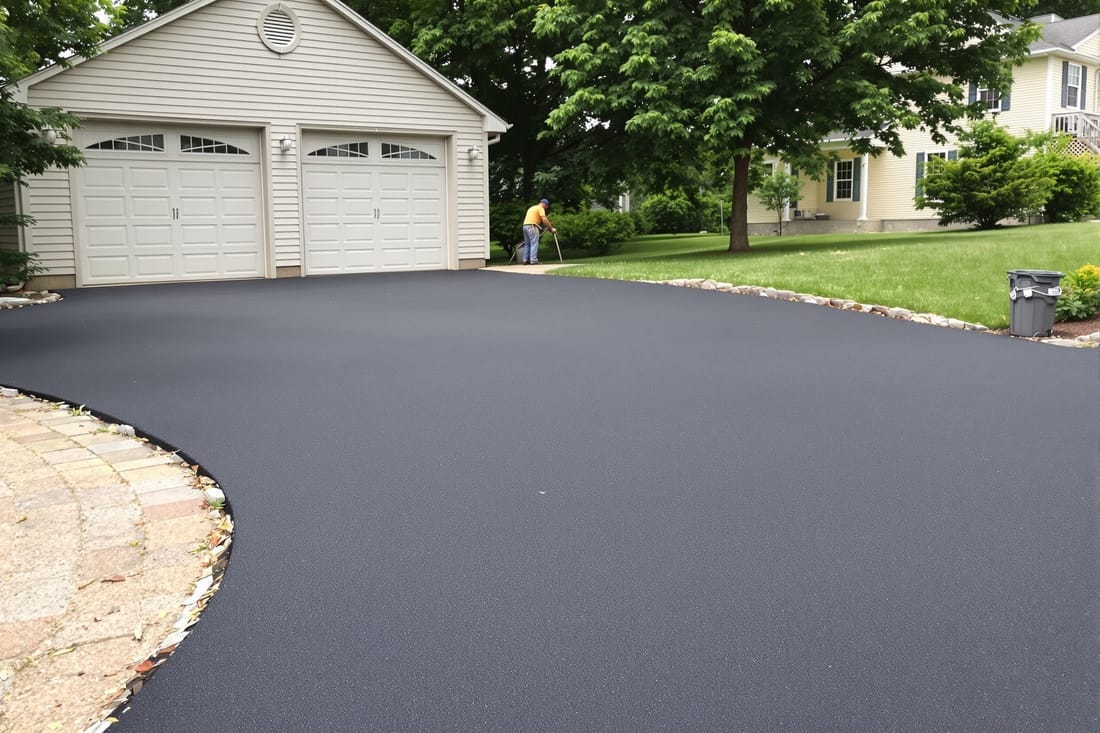
Get a smooth, durable asphalt driveway installation in Kansas City, MO that boosts curb appeal and stands up to daily use. We design, grade, and pave residential driveways for proper drainage, long life, and a clean finished look. From new builds to replacing gravel or old concrete, our team handles everything from start to finish.
Precision Asphalt Kansas City provides professional asphalt driveway installation throughout Kansas City, MO, Missouri and the surrounding area. Our licensed, insured crew delivers safe, clean, on-time work with a free estimate before anything begins. Call (816) 326-1167 or request your free quote.
Asphalt Driveway Installation in Kansas City, MO
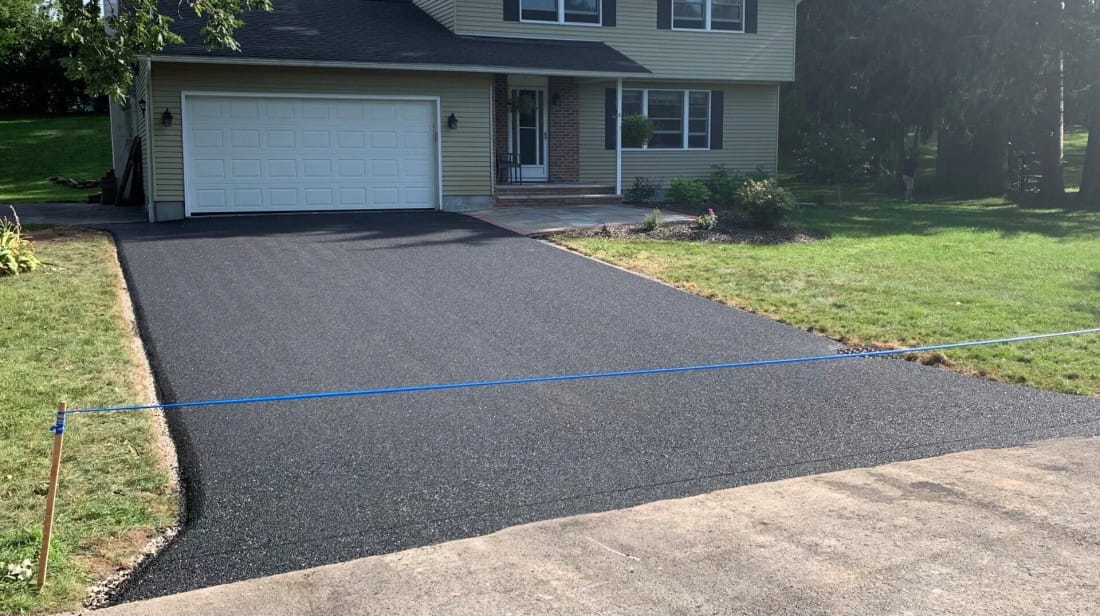
When you hire Precision Asphalt Kansas City for asphalt driveway installation, you are paying for a driveway that is designed specifically for Kansas City traffic, clay soils, and freeze-thaw cycles, not a one-size-fits-all template. We start by looking at how you actually use your driveway: how many vehicles you park, whether you regularly have delivery trucks or trailers, and where water naturally wants to run on your property.
For most homes in Kansas City, we recommend a compacted rock base of 4 to 6 inches and a hot-mix asphalt surface of 2.5 to 3 inches after compaction. Heavier use, like RVs or work trucks, usually calls for a thicker base and possibly a thicker asphalt lift. We do not guess on thickness; we measure and confirm on site.
Timing matters in Missouri. The best installation window for residential asphalt in Kansas City is typically April through early June and late September through October, when daytime temperatures are moderate and nights are not too cold. Asphalt can technically be laid outside that window, but you risk poor compaction and shorter life. If a customer insists on an early spring or late fall project, we adjust mix designs and rollers and are very clear about expectations.
How We Build a Long-Lasting Asphalt Driveway
A durable asphalt driveway starts with the base, not the black surface on top. Precision Asphalt Kansas City begins every asphalt driveway installation with a layout and grade check. We set string lines or laser levels to see exactly where high and low spots are, then plan for at least a 1.5 to 2 percent slope away from your home and garage so water moves off the pavement instead of into your foundation.
Next comes excavation. We typically remove 6 to 10 inches of soil and any old pavement in the drive lane area. In many Kansas City neighborhoods, the native soil is expansive clay that holds water and swells. Where we find soft or pumping subgrade, we undercut those areas, haul out the bad material, and replace it with compactable aggregate. Skipping this step is one of the main reasons driveways rut or sink.
We then install a crushed rock base, usually 3/4 inch limestone or similar aggregate that compacts tightly. The base is spread in lifts and compacted with a vibratory roller until it reaches the target density. On small or tight driveways, we use smaller plate compactors or walk-behind rollers to get around corners and near structures. Only after the base is stable and smooth do we bring in the hot asphalt.
The hot-mix asphalt is delivered from a local plant, placed with a paver where accessible, or spread and raked by hand in tighter areas. We then compact it with steel drum and pneumatic rollers while the material is still hot. Proper rolling technique is what gives the driveway its smooth finish and dense surface. We pay close attention to edges and transitions at the street and garage so there are no bumps or trip lips.
Design Options, Thickness Choices, and Edge Details
Not all asphalt driveway installations look the same, and you have options that affect both appearance and performance. Precision Asphalt Kansas City can install simple straight drives, wider parking pads, turnarounds, or boat and trailer parking areas that tie into the main driveway. During the planning phase we map turning movements so you do not end up driving off the edge or cutting corners across the lawn.
Thickness is one of the main design decisions. For light residential use with cars and light SUVs, we commonly install a 2.5 inch compacted surface course over a 4 to 6 inch base. For homes where large work trucks, moving trucks, or RVs regularly use the drive, we may recommend increasing the asphalt to 3 inches and the base to 8 inches or more, or installing a two-course system with a base layer and a finer surface layer on top. We are clear about where the money is going so you can see the trade-off between up-front cost and long-term performance.
Edges are another detail that is often overlooked. A clean, compacted edge helps keep the asphalt from unraveling where traffic regularly drives near the sides. We typically build the aggregate base a few inches wider than the asphalt, then compact the asphalt edge on a slight angle so rainwater does not sit along the side. If you want a more finished look, we can discuss adding concrete ribbons, paver borders, or gravel shoulders, which also protect the asphalt from vehicles breaking off the edge.
We also look at tie-ins to existing concrete sidewalks, garage slabs, and city streets. In Kansas City, many streets are concrete with specific approach standards. We make sure the new asphalt meets the existing surface smoothly and, where required, confirm that our plan aligns with local right-of-way or approach requirements so you do not have problems with the city later.
What Affects Cost for Asphalt Driveway Installation in Kansas City
Homeowners often ask why two driveways that look similar are priced differently. The cost of an asphalt driveway installation from Precision Asphalt Kansas City is driven by five main factors: size, thickness, base work, site conditions, and access.
Size is straightforward; more square footage means more material and more labor. Thickness is almost as important because an extra half inch of asphalt over a large driveway adds up quickly. When you see a very low price from another contractor, it is often because the base is too thin, the asphalt lift is under-spec, or both. We show our proposed cross-section in inches so you know exactly what you are paying for.
Base work can swing the price more than anything else. If we arrive and find a poor existing base, failed gravel, or saturated clay, we will explain what it will take to fix it: removal, replacement with quality aggregate, and thorough compaction. You can choose to address only the worst areas, but we will be honest about the risk of future settling if you do the bare minimum.
Site conditions include drainage challenges, steep slopes, and tight access. Working on a steep driveway or one that runs along a retaining wall may require additional grading equipment, extra labor, and more time to ensure compaction is achieved safely and evenly. Access affects how we can bring in trucks, pavers, and rollers. If everything has to be wheelbarrowed or moved with small machines because of obstacles, it affects the labor portion of the price.
We provide written estimates that break out major cost components, and we do not hide upcharges in vague line items. If there are unknowns, such as what we might find under an old driveway, we discuss contingency options up front so there are no surprises mid-project.
Common Driveway Problems and How We Prevent Them
Many of the calls we get at Precision Asphalt Kansas City are from homeowners dealing with existing driveway problems and wanting to avoid them on the new installation. The most common issues are standing water, early cracking, rutting in wheel paths, crumbling edges, and vegetation growing through seams.
Standing water usually comes from poor grading or low spots caused by settling. During installation, we check slopes with levels and adjust the base before any asphalt is laid. In flat Kansas City lots, we sometimes need to build subtle crowns in the driveway so water sheds to both sides instead of pooling in the middle. If your lot naturally drains toward the house, we may recommend adding a trench drain or reworking the layout instead of forcing the water to run where it does not want to go.
Early cracking and rutting usually point to thin asphalt, a weak base, or both. To prevent this, we verify base thickness as we work and do not place the asphalt until the base feels solid under a loaded truck or roller. For driveways that will see heavy use, we may propose a stronger aggregate base, thicker mats, or even limiting where the heaviest loads can park.
Crumbling edges are often the result of vehicles driving right on an unsupported edge. We extend the base beyond the asphalt, compact the edge properly, and recommend gravel or soil up against the edge once the driveway has cured. Vegetation issues are handled by fully removing sod and organic topsoil, applying a proper base, and using hot-mix asphalt with tight joints at tie-ins. While no driveway is maintenance-free, these steps significantly reduce the chances of early failure.
What to Expect Before, During, and After Your New Driveway
A smooth asphalt driveway installation starts with clear expectations. Precision Asphalt Kansas City begins with a site visit where we measure, check drainage, identify any permitting or right-of-way considerations, and talk through how you use your driveway. After that visit, you receive a written proposal with a layout description, approximate thicknesses, prep requirements, and an estimated timeline.
Before work starts, we ask you to move vehicles, trailers, and portable basketball goals, and to mark any underground features such as sprinkler heads and invisible dog fences. If utility locates are needed, we coordinate that so we do not hit buried lines while excavating. For most average-sized residential driveways in Kansas City, active construction lasts one to three days, depending on base repairs and weather.
During installation, expect some noise, vibration from rollers, and temporary loss of driveway access. We schedule the asphalt placement and compaction so that you regain foot access quickly, usually within a few hours after final rolling, and vehicle access within 24 to 48 hours, depending on temperature and mix type. In the peak of a Missouri summer, asphalt can stay soft a bit longer, so we may advise waiting slightly more time before parking heavy vehicles.
After the driveway is installed, we provide basic care guidelines. These usually include avoiding sharp turning of steering wheels while stopped, especially in hot weather, not parking heavy equipment at the same spot for days at a time during the first month, and keeping oil and fuel spills cleaned up so they do not soften the surface. Sealcoating is typically recommended after the first full year, not immediately, so the asphalt can cure. We remain available if you notice anything that concerns you in the first seasons of weather, and we stand behind the installation work we perform.