Home › Asphalt Pathways, Sidewalks, and Trails
Connect your property with safe, accessible routes using asphalt pathway paving in Kansas City, MO. We build walking trails, sidewalks, and multi use paths for parks, schools, and communities. Our team focuses on smooth grades, proper cross slopes, and durable edges to handle foot and bike traffic.
Precision Asphalt Kansas City provides professional asphalt pathway paving throughout Kansas City, MO, Missouri and the surrounding area. Our licensed, insured crew delivers safe, clean, on-time work with a free estimate before anything begins. Call (816) 326-1167 or request your free quote.
Durable Asphalt Pathways, Sidewalks, and Trails in Kansas City
Asphalt pathways, sidewalks, and trails live in a tough environment in Kansas City. Freeze-thaw cycles, sudden downpours, tree roots, and snow removal all put your pavement to the test. Precision Asphalt Kansas City designs and builds asphalt paths with these local conditions in mind, so you get a walking surface that stays smooth and safe for years.
We install asphalt pathway paving for neighborhoods, HOA common areas, apartment communities, office parks, schools, churches, and municipal trails throughout the Kansas City, MO area. Whether you need a short private sidewalk from your driveway to the front door or a multi-phase trail system around a lake, we match the pavement structure to the actual traffic it will receive.
Instead of one generic “path spec,” we look at who will use the surface and how. For example, an 8-foot trail that allows service carts and light maintenance vehicles needs a thicker base and asphalt layer than a 4-foot residential walking path behind a home. Our goal is to build just enough strength and drainage to perform well without over-building your project and inflating the cost.
How We Design Asphalt Pathways for Real-World Use
The first step is a site visit. A Precision Asphalt Kansas City estimator walks the route of your proposed pathway, sidewalk, or trail with you. We look at slopes, low spots where water collects, existing concrete or asphalt tie-ins, tree roots, utility structures, and how people already move through the area. For multi-use trails or HOA loop paths, we often recommend slight realignments to avoid drainage problems or steep grades that could be hazardous in winter.
Next, we determine pavement width, thickness, and cross slope. For simple residential walkways, 4 to 5 feet is typical. For community trails and school or park paths, 6 to 10 feet may be more appropriate. We usually design a slight crown or 1 to 2 percent cross slope so water runs off the surface instead of sitting on it, which is critical in our Kansas City climate where standing water can freeze and create cracking.
Material choices matter. For most pathways we use a fine-graded asphalt mix that gives a tighter, smoother surface than a standard parking lot mix. This makes walking, jogging, and stroller or wheelchair use more comfortable. On heavily used trails, we may specify a thicker base with a high-compaction limestone aggregate from local quarries, since local stone holds up well under repetitive foot and bike traffic.
Step-by-Step: Our Asphalt Pathway Paving Process
Preparing the base correctly is the most important part of asphalt pathway paving. We begin by clearing the route and excavating to the design depth, usually 6 to 12 inches below finished grade, depending on soil conditions and traffic expectations. In clay-heavy parts of Kansas City, MO, we often need extra excavation or a stabilization layer to keep the path from flexing or heaving.
After excavation, we install and compact the aggregate base. We typically use locally sourced crushed limestone, placed in layers and compacted with vibratory rollers or plate compactors in tighter areas. We check the base with a straightedge so there are no dips that could turn into puddles once the asphalt is installed.
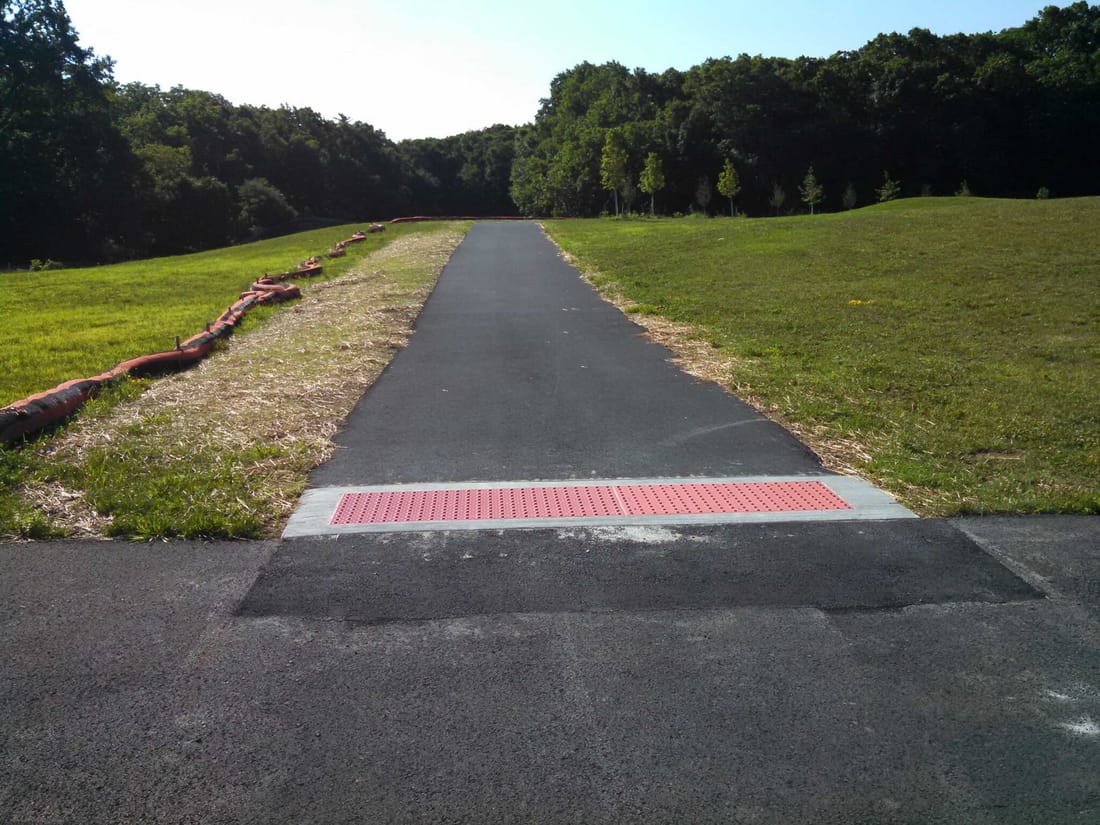
We then set forms or edges as needed. Along landscaped areas, we may install a compacted shoulder of aggregate to support the edges. Along streets or parking lots, we match elevations to existing concrete or asphalt so there are no trip hazards. If your project includes ADA ramps or tie-ins to public sidewalks, we follow city of Kansas City, Missouri standards for slope and landings.
Finally we lay the asphalt. For most sidewalks and trails, we place asphalt in a single lift of 2 to 3 inches compacted thickness. Larger or higher-load pathways may receive two lifts. The asphalt is spread, then compacted while hot to lock the aggregates together. Our crew checks transitions, manhole covers, and curb returns so there are no abrupt edges. Most paths are ready for light foot traffic within a few hours and typical use by the next day.
Site Constraints, Drainage, and Tree Root Issues
Pathways often have to weave through existing landscaping, buildings, and utilities. Precision Asphalt Kansas City spends time up front figuring out how to avoid future problems, especially in older Kansas City neighborhoods with mature trees and older infrastructure.
Tree roots are a frequent challenge. Instead of simply paving over raised roots and hoping for the best, we work with you to choose a solution, such as gently rerouting the path around critical root zones, using root barriers where appropriate, or adjusting elevations to minimize root cutting. These steps reduce future buckling that can crack the pavement or create trip hazards.
Drainage is another key issue. On many local projects, we find low-lying areas where water already collects. If we place an asphalt path directly in those spots without changes, the surface will deteriorate much faster. Our crews may add underdrains, regrade shoulders, or install small swales to move water away from the pavement. Around retention ponds or creeks that frequently rise, we may adjust the vertical alignment so the trail sits higher and stays passable more often.
Where a trail or sidewalk crosses a driveway or connects to a parking lot, we design transitions that can handle occasional vehicle traffic without rutting. This usually means slight thickening of the asphalt or base at crossings, or installing a concrete apron in the highest stress areas while keeping asphalt for the main pathway.
What Affects Cost and Longevity of Your Asphalt Pathway
Several factors drive the price and durability of asphalt pathway paving in Kansas City, MO. Length and width are obvious cost drivers, but they are not the only ones. Site access plays a big role. A path that we can reach easily with equipment and trucks will cost less per foot than one that requires smaller machinery, hand work, or hauling materials into a tight courtyard.
Subgrade conditions affect both cost and service life. If the soil is soft, saturated, or highly expansive, we may recommend a thicker base course or soil stabilization. This adds some upfront cost but usually avoids early cracking and settling that would require patching or reconstruction later. For projects on slopes, we may add erosion control measures such as riprap or turf reinforcement mats to keep shoulders stable.
Curves, intersections, and special features also add complexity. Meandering trails that follow a natural landscape use more labor to shape and compact base material. Crosswalk tie-ins, decorative bands, and ADA features require careful layout and extra time. We discuss these tradeoffs with you so you know exactly where your budget is going.
To extend the life of your pathway or trail, we usually recommend a sealcoat within the first 2 to 3 years, then on a regular cycle depending on use and exposure. Sealcoating shields the surface from UV and moisture, which are significant in the Kansas City area. Timely crack sealing keeps small thermal cracks from turning into structural failures. Precision Asphalt Kansas City can set up a simple maintenance schedule so your new path remains safe and attractive over the long term.
Choosing a Local Asphalt Pathway Contractor You Can Trust
When you build a pathway or trail, you are creating something people will walk, run, push strollers, ride bikes, and use wheelchairs on every day. Safety, accessibility, and comfort matter just as much as appearance. Working with a local company like Precision Asphalt Kansas City means you get a team that understands local codes, common soil issues, and how our weather affects pavement performance.
Before you hire any contractor, ask for details about their base design, asphalt mix, and compaction approach specifically for pathways and trails, not just parking lots. A walkway that is too thin, lacks proper slope, or is built on an unprepared subgrade might look fine on day one but can develop dips, cracks, or edge failures within a few freeze-thaw cycles.
We encourage you to walk a few of our completed projects in and around Kansas City, MO and see how they feel underfoot. Notice how water drains off the surface, how smooth transitions are at driveways and street crossings, and how well the edges are supported. We are happy to explain what you see and how it was built.
If you are planning a new asphalt pathway, sidewalk, or trail, or need to replace an aging concrete walk with a more forgiving asphalt surface, contact Precision Asphalt Kansas City. We will review your site, propose a design that fits your budget and use, and schedule the work at a time that minimizes disruption for residents, tenants, or visitors.