Home › Commercial Gravel-to-Asphalt Conversions
Turn muddy, dusty lots into professional pavements with commercial gravel to asphalt conversions in Kansas City, MO. We regrade and compact existing stone, enhance the base, then install durable asphalt for parking lots and drives. Your customers and trucks will appreciate a cleaner, smoother surface.
Precision Asphalt Kansas City provides professional commercial gravel to asphalt throughout Kansas City, MO, Missouri and the surrounding area. Our licensed, insured crew delivers safe, clean, on-time work with a free estimate before anything begins. Call (816) 326-1167 or request your free quote.
Commercial Gravel-to-Asphalt Conversions in Kansas City, MO
Loose gravel might have worked when your property was new or traffic was light, but once you are dealing with customers, employees, and delivery trucks, it starts costing you money. Precision Asphalt Kansas City specializes in commercial gravel-to-asphalt conversions that turn dusty, rutted lots into durable, professional-looking asphalt surfaces built for Kansas City conditions.
Our team focuses specifically on commercial sites in the Kansas City, Missouri area, including office parks, industrial facilities, small retail centers, and multi-family parking lots. We understand the mix of heavy truck traffic, freeze-thaw cycles, and clay-heavy subsoils that affect how long your new pavement will actually last.
Rather than just paving over gravel, we evaluate your existing base, drainage, and traffic patterns, then design the conversion so your asphalt surface performs for the long term. The result is smoother access for vehicles, fewer liability concerns, and a more professional first impression for your property.
How We Evaluate Your Existing Gravel Lot
A successful commercial gravel-to-asphalt conversion starts with an honest assessment of what is already there. At Precision Asphalt Kansas City, we walk the entire site with you to identify problem areas before any pricing or scheduling is finalized.
We check the existing gravel depth, gradation, and compaction using simple field tests and, when needed, plate load or proof-roll testing with a loaded truck. If the base flexes under load or shows pumping (wet fines squeezing up), we know the subgrade needs reinforcement before asphalt can go down.
Kansas City soils often include expansive clays that hold water and move seasonally. We probe the subgrade and note soft pockets, previous utility trenches, and any signs of underground drainage issues. Low spots, standing water after a rain, and ruts where trucks turn are flagged for grading and drainage corrections.
During this evaluation, we also document traffic flow, truck loading areas, dumpster pads, and delivery routes. These factors drive how thick the asphalt needs to be in different zones, rather than using a one-size-fits-all section that may fail prematurely in high-stress locations.
Step-by-Step Process for Converting Gravel to Asphalt
Once we understand your site conditions and traffic demands, Precision Asphalt Kansas City follows a clear, repeatable process to complete the commercial gravel-to-asphalt conversion with minimal disruption to your operations.
1) Site preparation and rough grading. We blade the existing gravel surface, cut out high spots, and fill low areas. Any organic material or soft mud pockets are undercut and replaced with suitable aggregate. If heavy trucks use the site, we may widen or adjust turning radii during this phase.
2) Base construction and stabilization. We build or rebuild the aggregate base to the depth your site requires, often 4 to 8 inches for light commercial parking and thicker where semi-trucks or dumpsters sit. In problem areas with weak clay or chronic moisture, we may use larger aggregate, geogrid, or chemical stabilization to keep the base from pumping or rutting.
3) Fine grading and compaction. Using motor graders and rollers, we shape the base to precise slopes that move water toward inlets or daylight, usually with a minimum 1.5 to 2 percent cross slope. We compact the base in multiple passes to reach the density needed so it will support the asphalt mat without future settlement.
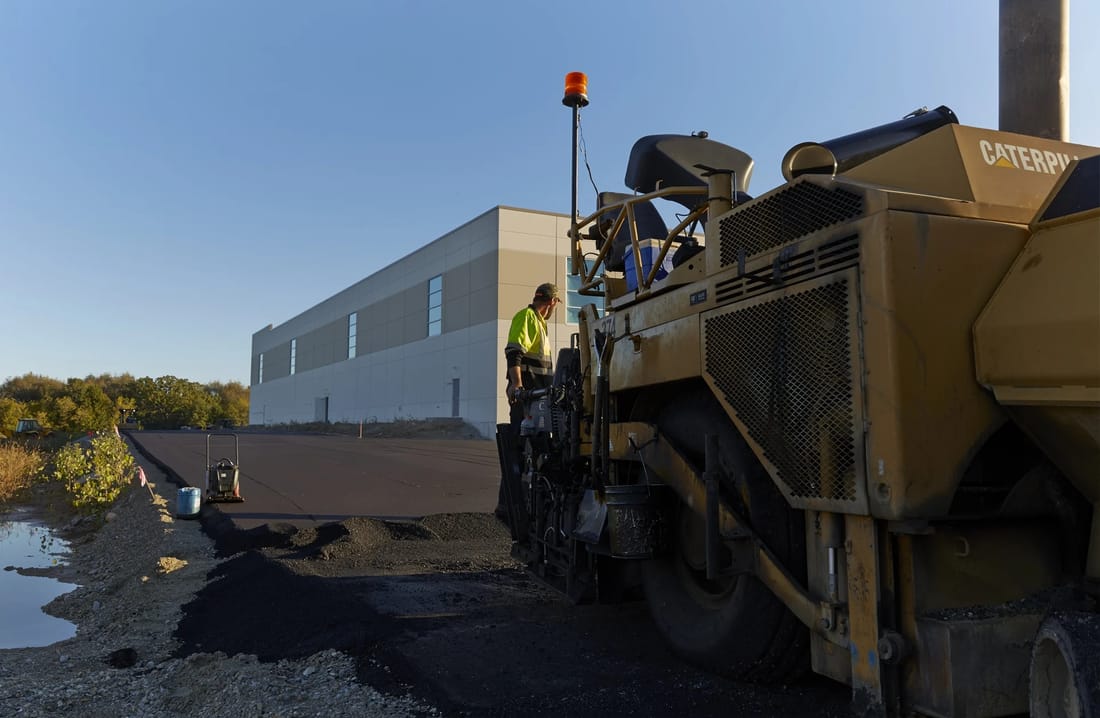
4) Tack coat and asphalt paving. We apply a tack coat to bond the asphalt to the base, then install the asphalt lifts with commercial pavers. Depending on your design, we may place one thicker structural course or a structural course plus a finer surface course. Each lift is compacted with steel and pneumatic rollers to achieve target density and smoothness.
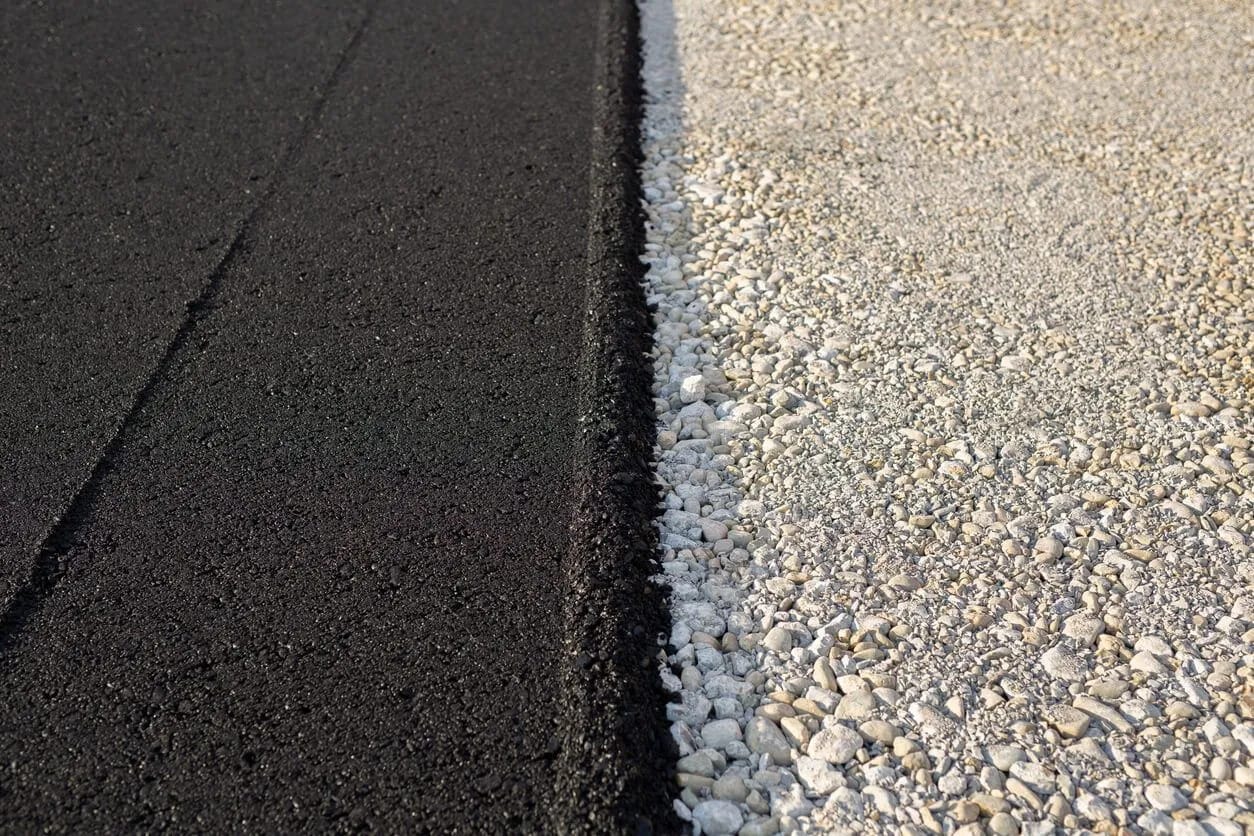
5) Joint sealing, striping, and site cleanup. We pay special attention to joints between new asphalt and existing pavements or concrete, sealing as needed. Once the mat has cooled and cured enough, we paint stalls, fire lanes, ADA spaces, and traffic markings to your layout. We then sweep and leave the site ready for use.
Material and Design Options for Commercial Asphalt Surfaces
Not every commercial gravel-to-asphalt conversion is the same, and the design details matter. Precision Asphalt Kansas City will explain your options so you are not overpaying for unnecessary thickness or underbuilding in critical areas.
Asphalt mix type. For general parking areas, we typically recommend a dense-graded commercial mix that balances durability and cost. High-traffic drive lanes, loading docks, and entrances may use a slightly stiffer or thicker mix to resist rutting from turning and braking.
Layer configuration. Many Kansas City commercial conversions perform well with a single 3 to 4 inch asphalt layer over a properly built base. If you have substantial semi-truck traffic or frequent dumpster service, we may specify a two-lift system, for example a 2.5 to 3 inch base course with a 1.5 inch surface course. This creates a stronger structure and allows future resurfacing without full replacement.
Reinforcement and transitions. At dumpster pads, dock aprons, and drive-thru corners, we often recommend thickened asphalt or concrete tie-ins because these zones experience much higher point loads. We also design smooth transitions to existing city streets and alleys, accounting for Kansas City curb profiles and required elevations so you do not end up with trip hazards or ponding.
Drainage enhancements. In some conversions, we add or adjust catch basins, trench drains, or surface swales. Correcting poor drainage during the conversion prevents premature cracking and potholes driven by trapped water under the pavement.
What Drives the Cost of a Gravel-to-Asphalt Conversion
Commercial gravel-to-asphalt projects are not priced by square footage alone. Precision Asphalt Kansas City structures pricing around what it will actually take to build a pavement section that meets your traffic needs and site conditions.
Key cost drivers include:
Existing base quality. If your gravel lot already has a deep, well-compacted, and properly graded base, the project is primarily an asphalt overlay with minor corrections, which is more economical. If we find thin gravel over soft clay, significant undercutting and base reconstruction will increase cost but also prevent early failure.
Required asphalt thickness and area usage. Light employee parking is less demanding than a facility that sees daily tractor-trailers or heavy equipment. Heavier loads require stronger sections, often with thicker base and asphalt, especially in drive lanes and loading zones.
Drainage corrections and utilities. Installing or adjusting drainage structures, reworking ditches, or dealing with shallow utilities or manholes adds complexity and time. These items protect your investment, since water and poor compaction around structures are top causes of potholes.
Access and phasing. If your lot must remain partially open during construction, we plan the work in phases and provide temporary access, which requires additional labor and mobilization. We commonly phase projects for medical offices, retail centers, and apartment complexes so you can stay operational while we work.
To avoid surprises, we provide detailed written scopes based on our site evaluation, so you see exactly what is included in your commercial gravel-to-asphalt conversion.
Common Problems and How We Prevent Them in Kansas City
Commercial gravel-to-asphalt conversions can fail quickly if shortcuts are taken. Precision Asphalt Kansas City focuses on preventing the issues we frequently see on poorly built lots in the Kansas City, Missouri market.
Problem 1: Pavement rutting in truck paths. This often comes from thin asphalt over an underbuilt base. We address it by thickening the structure under known truck routes, using stiffer mixes where appropriate, and making sure the base is fully compacted and adequately drained.
Problem 2: Cracking and potholes near the edges. When edges are not supported, heavy vehicles drop off or straddle the pavement and cause it to break apart. We minimize this risk with proper edge compaction, using full-depth sections to the outer limits, and in some cases adding edge restraint or widening beyond the typical drive lane.
Problem 3: Water standing in the lot after storms. Ponding water accelerates cracking and creates slip hazards. During design, we check existing grades, identify where water currently sits, and establish slopes and drainage improvements that move water off the surface quickly, considering Kansas City’s intense rain events and freeze-thaw cycles.
Problem 4: Premature cracking over utility trenches. Kansas City properties often have old trench backfills that were never compacted properly. We locate these where possible, recompact or rebuild them, and sometimes reinforce with geogrid or thicker sections so that your new asphalt does not mirror these old weaknesses.
Why Work With a Local Kansas City Asphalt Team
Selecting the right contractor for a commercial gravel-to-asphalt conversion can be the difference between a surface that lasts 20 years and one that fails in 3. Precision Asphalt Kansas City brings local experience that directly affects how your project is planned and built.
We work daily with Kansas City area businesses, so we understand local permitting, coordination with city streets and alleys, and how to schedule around busy seasons or peak customer hours. Our crews are familiar with the specific aggregate sources, asphalt plants, and material performance in this region, which translates into more consistent results on your site.
Because we are local, we can visit your property quickly to evaluate conditions, explain options on-site, and adjust phasing when weather or your operations change. If you manage multiple properties around the metro, we can standardize specifications so every conversion meets the same quality level.
Before you commit to a contractor, ask about base testing methods, drainage design experience, and local commercial references. Precision Asphalt Kansas City is prepared to walk you through previous gravel-to-asphalt conversions similar to yours so you can see how the design choices we recommend have performed in real Kansas City conditions.