Home › Industrial and Heavy-Duty Asphalt Paving
Handle heavy traffic with confidence using industrial asphalt paving in Kansas City, MO. We design and build thick section pavements for truck yards, loading docks, and industrial facilities. Proper base depth, mix design, and compaction help resist rutting and premature failure under constant loads.
Precision Asphalt Kansas City provides professional industrial asphalt paving throughout Kansas City, MO, Missouri and the surrounding area. Our licensed, insured crew delivers safe, clean, on-time work with a free estimate before anything begins. Call (816) 326-1167 or request your free quote.
Industrial Asphalt Paving for Heavy Loads in Kansas City
Industrial and heavy-duty asphalt paving is a different level of work than a basic parking lot. At Precision Asphalt Kansas City, we build pavements that handle constant truck traffic, forklifts, loaded trailers, and heavy equipment without rutting or breaking up. Most of our industrial asphalt paving projects in Kansas City, MO involve distribution centers, factories, trucking yards, waste facilities, and large commercial sites that see daily abuse from heavy axles and tight turning.
Instead of a one-thickness-fits-all approach, we design each pavement section around what will actually be driving and parking on it. That means asking about your heaviest vehicles, turning patterns, drum rollers, pallet jacks, and whether you will be adding structures or storage containers in the future. We then match the asphalt mix design and base depth to the reality of your site, not just a generic spec pulled from a book. This is the difference between a surface that looks fine the day it is paved and one that still holds up after ten Kansas City winters and summers.
Kansas City’s freeze-thaw cycles, river valley soils, and drainage issues play a big role in how industrial asphalt performs. Our crews work all over the metro, so we know where clay pockets are common, where groundwater tends to sit, and which areas need extra attention on subgrade and drainage. This local knowledge lets Precision Asphalt Kansas City build heavy-duty pavements that stand up to our specific climate instead of failing early from frost heave, trapped water, or soft subgrade.
How Heavy-Duty Asphalt Paving Is Built Step by Step
A long-lasting industrial asphalt pavement always starts below the blacktop. We begin with a site visit, core samples or test pits when needed, and a review of any available geotech reports. If we find soft or pumping subgrade, we undercut those areas and replace them with compacted aggregate or a stabilized base. For high-load areas such as dock aprons, dumpster pads, and truck scales, we almost always recommend thicker base and asphalt, and sometimes a concrete transition.
Once the weak material is removed, we place a graded aggregate base. For heavy-duty work in Kansas City, MO this usually means at least 6 to 12 inches of compacted rock, sometimes more for high-traffic lanes or yards. We compact the base with vibratory rollers to achieve proper density, because under-compacted base is one of the top causes of rutting and potholes in industrial yards. We fine grade the surface to promote water shedding toward inlets and swales, not toward your building or loading docks.
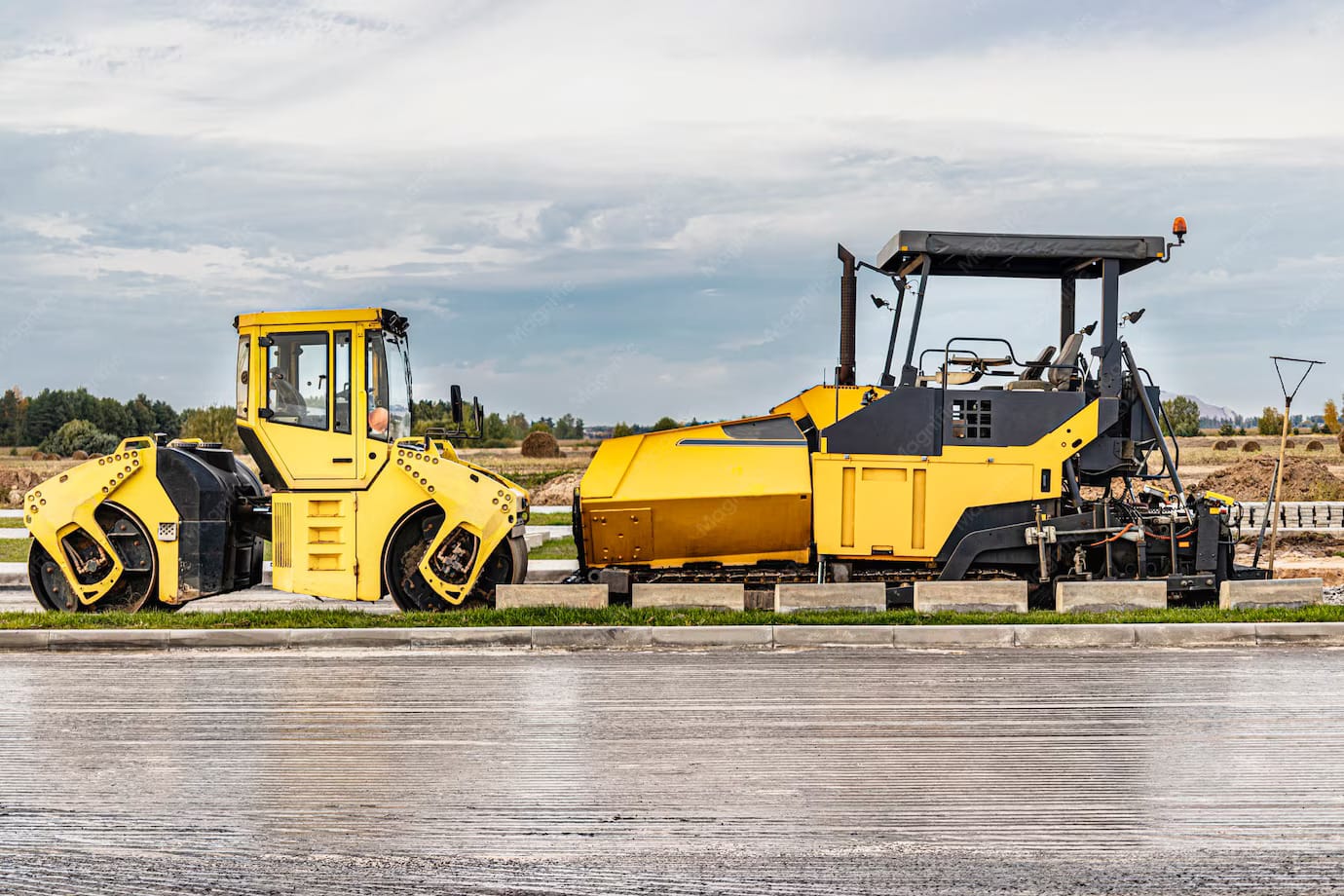
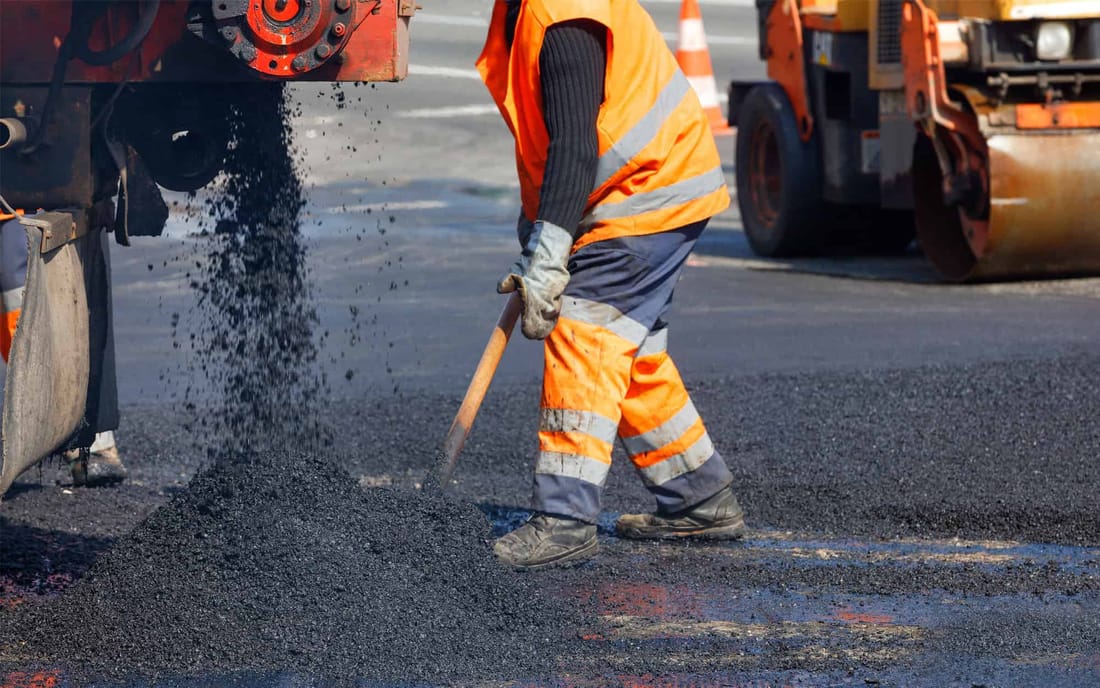
Next we pave in lifts. On industrial projects, Precision Asphalt Kansas City typically installs a binder course (the structural layer) and a surface course (the wearing layer). Binder lifts are thicker and use a coarser mix that carries most of the load. Surface lifts are thinner, tighter, and designed for tire contact and weather. We control mat temperature, rolling patterns, and joint locations, especially near docks, manholes, and transitions where failures often show up first. Compaction is verified during paving to meet or exceed specification, because even the best mix will fail early if it is not compacted to the right density.
After paving, we saw-cut clean joints where asphalt meets concrete, install appropriate sealants if required, and address any low spots before striping. For 24/7 operations like freight terminals and production plants, we can phase work so you keep parts of the yard open while we build out sections, then tie them together with smooth transitions.
Mix Designs, Thickness Options, and What Drives Cost
Industrial asphalt paving costs are driven mostly by thickness, base preparation, and access. In Kansas City, a light-duty commercial lot might get 3 to 4 inches of asphalt over 4 to 6 inches of base. For heavy trucks, forklifts, and containers, it is common to see 5 to 8 inches of asphalt over 8 to 12 inches of base, and more in critical areas. Dock approaches, trash truck lanes, and tire scrub zones at tight corners often need extra thickness or a different pavement section than the rest of the yard.
Precision Asphalt Kansas City works with different asphalt mix designs depending on your operations. High stability mixes with more stone and modified binders are often used in areas where trucks sit fully loaded in summer heat, such as staging lanes and scale approaches. We might specify an open-graded or permeable underlayer in certain situations to relieve water pressure and improve drainage under the pavement. For facilities that use chains, steel tracks, or sharp turning forklifts, we select mixes that are less prone to raveling and surface tearing.
Site access and phasing are another major cost factor. Tight industrial sites near the West Bottoms or older parts of Kansas City, MO often require smaller equipment, more handwork, and more phases to keep operations running. That can increase the labor portion of your project even if the paving area is not huge. Conversely, large open yards with easy truck access allow us to run wider pavers and bigger rollers, which reduces costs per square foot.
Material lead times and season timing also come into play. Very heavy-duty mixes may require advance scheduling with local asphalt plants, especially during peak paving season. Planning ahead with Precision Asphalt Kansas City lets us coordinate the right mix and crew size so you are not paying extra for rush production or after-hours work unless it truly benefits your operations.
Common Industrial Pavement Problems and How We Prevent Them
Industrial pavements fail in different ways than small parking lots, and we design and build with that in mind. One of the most common issues we see in Kansas City industrial yards is rutting in truck lanes where axles follow the same line day after day. To fight this, we increase the structural thickness, use higher stability mixes, and pay very close attention to compaction in those wheel paths. On projects where repetitive heavy loading is extreme, we may recommend a thicker asphalt section or a composite design with both asphalt and concrete.
Another frequent problem is cracking and settling along dock doors and slab transitions. Buildings settle differently than exterior pavement, especially with Kansas City’s clay soils and moisture swings. Precision Asphalt Kansas City addresses this by reinforcing dock approaches with thicker base, designing better drainage away from the dock wall, and setting up clean, well-compacted tie-in points. Where appropriate, we use concrete headers or transition pads to protect the edge of the asphalt from truck impact and trailer stands.
Drainage issues also show up faster under heavy industrial use. Puddles soften the base, water finds its way through tiny cracks, and freeze-thaw cycles break up the surface. We build industrial pavements with enough slope to move water, and we pay attention to where that water goes. In some Kansas City, MO locations with known drainage challenges, we add underdrains or improve the subgrade with stabilization so that trapped groundwater does not undermine the pavement from below.
Finally, we plan for maintenance from day one. Strategic joint placement, thicker sections in abuse areas, and logical drainage paths all make it easier to repair and overlay in the future without shutting down your entire operation. For busy plants and terminals, we can set up a phased preventative maintenance plan so you get maximum life out of your heavy-duty asphalt before it ever reaches the point of major structural failure.
What Kansas City Facility Managers Should Know Before Hiring
If you manage an industrial site in Kansas City, MO, the biggest mistake you can make is treating heavy-duty asphalt paving like a simple parking lot job. When you are comparing proposals, look beyond the total price and ask specific questions. How many inches of asphalt and base are they including in truck lanes, loading docks, and dumpster areas, not just in the light-use parking? Did they visit the site in person and probe or test the subgrade? Are they using the same mix everywhere, or tailoring it to high-load areas?
You should also look for a contractor who understands how to keep your operation running. At Precision Asphalt Kansas City, we schedule work around your shipping windows and production schedules whenever possible. That can mean night or weekend paving, breaking the job into logical zones, and setting up temporary traffic control that still lets your trucks move. On live industrial sites, planning is just as important as the asphalt itself.
Ask for references for similar industrial asphalt paving projects in the Kansas City area, not just retail parking lots. A contractor used to strip malls might not be ready for the loading and turning forces in a freight terminal or manufacturing plant. We are happy to walk you through nearby projects we have completed, discuss how those pavements are performing, and explain what we would do the same or differently at your site.
Finally, insist on clear documentation. A solid proposal should spell out thicknesses, base type, mix types, drainage approach, and how transitions to existing pavement or concrete will be handled. With Precision Asphalt Kansas City, you get that detail upfront so you can budget accurately and know what you are paying for, long before the first truck of asphalt ever arrives on your site.